Bimbo Adekanmbi: A Perfectionist in Pursuit of A Well-Ordered Society | |▪︎ By Isiaka Kehinde (Mr Ethics)
By Isiaka Kehinde
Without human development, no society can genuinely lay claim to significant progress. In the light of this, Bimbo Adekambi’s philosophy appears to align with what scholars describe as the Capability Approach, a development theory that places human welfare, freedom, opportunities and the enhancement of people’s capabilities at the centre of development rather than measuring progress merely by the number of physical structures erected.
Prof. Olatunji Oyeshile of the University of Ibadan posits that a rational individual would naturally prefer a society characterised by order to one overwhelmed by disorder. It is only within an orderly society that individuals can enjoy the enabling conditions necessary for the attainment of a happy and fulfilling life, ultimately contributing to sustainable social development.
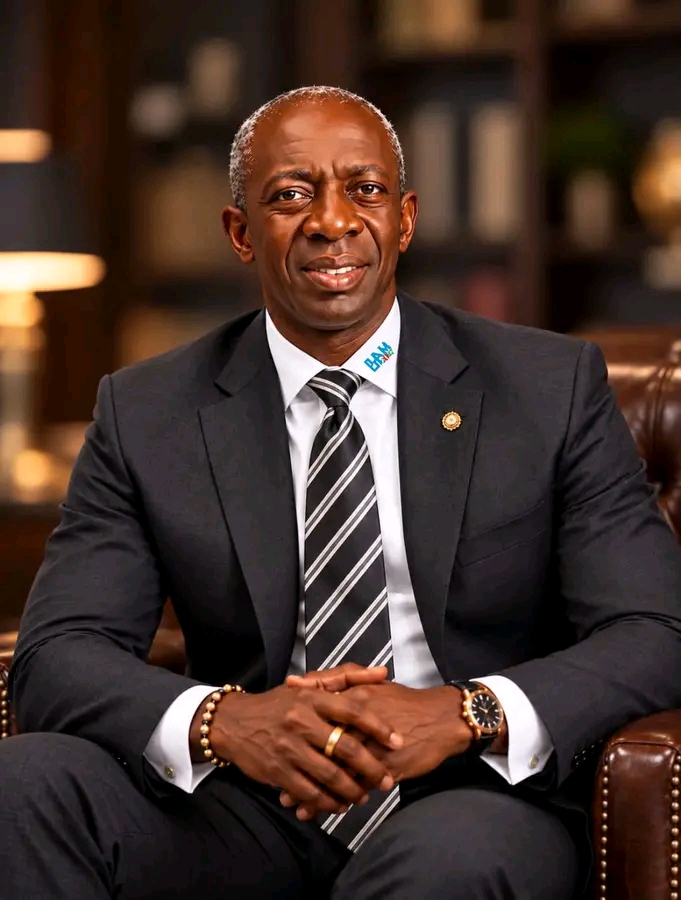
Against this philosophical backdrop, the governorship candidate of the Allied Peoples Movement (APM) in Oyo State, Bimbo Adekambi, has consistently projected a vision of a society anchored on merit, fairness, discipline and equal opportunities. While condemning antisocial activities, he applauds positive behavioural tendencies capable of moving Oyo State to the next level.
Speaking during a special radio interview on BCOS on Saturday on a programme titled “Gbagede Oselu” Bimbo Adekambi presented himself as an advocate of peaceful coexistence, making it abundantly clear that violence has no place in his political philosophy. He emphasised that no electoral victory is worth the shedding of human blood. In his words, “Ẹ̀mi eeyan o ni towo mi bo,”human life will never be sacrificed through my actions. This is a profound declaration that underscores the sanctity of human life and the need to place humanity above political ambition.
His aspiration, as conveyed during the interview, is to promote an orderly society where everyone is encouraged to do the right thing and leave positive footprints that posterity will be proud of.
He maintained that traditional rulers have important roles to play in supporting the kind of governance they envisage for their communities. He also called for the proper registration of mining operators, stressing that mining activities should not be conducted clandestinely or outside regulatory supervision.
Beyond this, he cautioned citizens against irresponsible utterances, land grabbing, and other antisocial practices capable of undermining the state’s development. His position reflects an understanding that sustainable development is not exclusively the responsibility of government; it also requires responsible citizenship and collective commitment to the common good.
One aspect of the interview that particularly caught my attention was his emphasis on building a merit-based society. Adekambi explained that his payment of WAEC fees and scholarship support for students are intended to encourage indigent but academically qualified individuals. In other words, financial circumstances should not become an insurmountable obstacle to educational advancement, but assistance must also be anchored on merit rather than entitlement.
He reinforced this position with a Yoruba proverb: “Ọmọ to ba si apa ni iya e n gbe” In essence, the child who opens his or her arms makes it possible to receive an embrace. The underlying message is that opportunities should be available to those who demonstrate commitment, readiness, and the capacity to benefit from them.
He extended this philosophy to public procurement, arguing that contracts should be awarded to the most qualified and competent bidders rather than being distributed through nepotism, favouritism, or personal connections. This is particularly significant in a society where the abuse of public office and patronage can undermine institutional efficiency.
Equally noteworthy was his concern for vulnerable members of society, particularly persons living with disabilities and those who are physically challenged. He advocated their inclusion in employment opportunities and other dividends of democracy, stressing the importance of ensuring that the less privileged are not excluded from the benefits of governance.
He also encouraged citizens to develop a strong sense of pride in Oyo State and to place the collective interest of the state above narrow personal considerations. To buttress this point, he recalled Governor Oluseyi Makinde’s position that whenever a choice has to be made between what benefits the state and what benefits him as a person, l, the public interest should take precedence. This is an important principle of public service: the common good must never be sacrificed on the altar of private advantage.
On the issue of sexual and gender-based violence, Adekambi maintained that the law must be allowed to take its course and that such incidents should never be swept under the carpet. His position reinforces the need for accountability, justice, and the protection of vulnerable members of society.
He equally advocated peaceful coexistence and harmonious relationships among citizens. Addressing political supporters and spokespersons, he urged them to defend their political leaders with verifiable facts rather than resorting to defamatory statements, unsubstantiated allegations, and unnecessary character assassination. Political loyalty, in his view, should not become an excuse for abandoning decency and responsible public communication.
The Ladoke Akintola Airport Upgrade: A Case for Developmental Continuity
On the upgrading of the Ladoke Akintola Airport, Adekambi explained that no money had been collected from the Federal Government as of the time of the interview, noting that the Makinde administration was pursuing alternative funding arrangements under the Federal Government’s approval.
He commended Governor Seyi Makinde’s decision to pursue the upgrading of the existing airport rather than embark on an entirely new airport project, describing the approach as a practical development option.
He also highlighted several modifications and improvements undertaken at the airport, expressing confidence that the facility was already in use and that outstanding aspects of the upgrade would be completed within a short period.
Among the facilities and improvements he mentioned were high-intensity runway, lighting to support emergency landings, the Instrument Landing System (ILS), a fire service station, and other aviation-related infrastructure
He further spoke about plans to increase the airport’s annual passenger-handling capacity from approximately 100,000 to one million passengers in a year.
Beyond Infrastructure: The Imperative of a Value-Based Society
From the interview, one can deduce that Adekambi’s development philosophy extends beyond the construction of physical infrastructure. His emphasis on meritocracy, responsible citizenship, peaceful coexistence, inclusiveness, discipline, and institutional accountability presents a broader conversation about the kind of society Oyo State should aspire to become.
What stands out is his insistence that development must be accompanied by the right values. Roads, airports, schools, and other public infrastructure are important, but their impact becomes more meaningful when supported by responsible citizens, transparent institutions, and a culture that rewards competence rather than connections.
His position that electoral victory should never come at the expense of human life is particularly significant in a political environment where disagreements can sometimes degenerate into hostility. Equally important is his advocacy of merit-based opportunities, especially for indigent students and vulnerable members of society.
.
Ultimately, the 2027 governorship contest presents an opportunity for the people of Oyo State to examine the competing visions, policy proposals, records, and development philosophies of the candidates. Adekambi’s recent interviews have brought several of these issues into public discussion.
For me, the most compelling lesson is that a well-ordered society can not be built by government alone. It requires leaders who understand the importance of institutions, citizens who appreciate their responsibilities, and a collective commitment to making merit, fairness, justice, and human dignity the foundations of development.
After all, the true measure of a progressive society is not merely what it builds in concrete and steel, but the quality of human beings it develops and the values it bequeaths to posterity. “Bimbo n bo, Oyo State, E lo fokanbale”