FAAC RECEIPTS: Let The Records Speak, Not Political Insults | |▪︎ By Wale Omoboyesola
By Wale Omoboyesola
I have read Sola Abegunde’s article titled “Governor Seyi Makinde On FAAC Receipts: The Mouth Of A Liar Ought To Bleed.” While I believe that every government should be subjected to scrutiny, accountability and constructive criticism, I disagree with the approach of reducing an important discussion about public finance to accusations of lying and personal abuse.
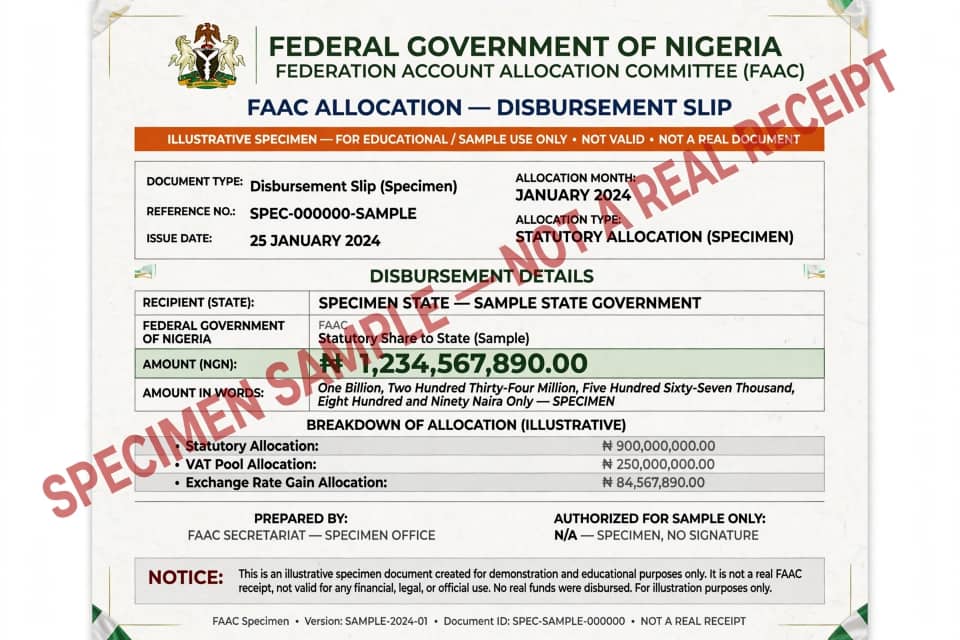
If there is a disagreement over FAAC receipts, the answer is simple: let the records speak.
Governor Seyi Makinde reportedly disclosed that Oyo State received about ₦22 billion from FAAC for the month under discussion, while almost ₦18 billion had been committed to salaries and another ₦1.8 billion approved as wage award.
The question of whether the ₦22 billion relates strictly to the state government or involves other statutory components should indeed be clarified. Likewise, Nigerians have every right to ask for a transparent breakdown of state revenue, expenditure, deductions and debt obligations.
But let us also be intellectually honest: FAAC allocation is not the same thing as free money available to the governor for arbitrary spending. There are statutory obligations, personnel costs, pensions, debt servicing, overheads and capital commitments. Moreover, local government allocations are constitutionally distinct from the resources of the state government. Therefore, any analysis that lumps the finances of the state and the 33 local governments together without a proper breakdown risks confusing the public rather than enlightening them.
The writer is right on one important point: government should be transparent. I would therefore encourage the Oyo State Government to publish a comprehensive statement showing monthly FAAC receipts, IGR, statutory deductions, debt servicing, personnel expenditure and other major financial commitments. That would put the matter beyond political speculation.
But the same standard must apply to the critics.
If someone alleges that the governor is lying, where is the contradictory official record? The Federal Ministry of Finance maintains an archive of FAAC releases and allocation tables. That is where competing claims should ultimately be tested—not through abusive headlines or political name-calling.
There is also a larger point that should not be lost. Oyo’s finances have changed considerably since 2019, and the governor himself has previously acknowledged that FAAC receipts had increased while also arguing that increased federal allocations have not automatically translated into improved living conditions. Recent reporting puts Oyo’s dependence on federal allocation at a substantially different level from the early years of the administration.
So, rather than saying “the mouth of a liar ought to bleed,” let us ask better questions:
How much came in? How much went to salaries? How much went to pensions? How much went to debt servicing? How much belonged to the state? How much belonged to the local governments? How much was generated internally? And what was ultimately spent on capital projects?
Those are the questions that matter to the people of Oyo State.
Political opponents have every right to challenge Governor Makinde. Supporters equally have the right to defend his record. But in 2026, we should be able to move beyond emotional politics and allow independently verifiable figures to determine who is telling the truth.
If the governor’s figures are wrong, publish the figures that prove him wrong. If they are correct, let us acknowledge that too.
Oyo State deserves facts, accountability and responsible political debate—not insults masquerading as financial analysis.