IS RESPECT A ONE-WAY STREET ? Ladoja at 82: Between Gratitude, Reciprocity and the Dignity of the Olubadan Throne || By Dr Peter Akande
By Dr Peter Akande
The article titled “Ladoja @82: When the Ladder Becomes Too Tall and Makinde’s Sin of Ingratitude” raises an important subject concerning the relationship between Governor Seyi Makinde and His Imperial Majesty, Oba Rashidi Adewolu Ladoja, the Olubadan of Ibadanland. The writer is certainly entitled to his opinion and interpretation of events. However, when discussing matters involving the Governor and the revered Olubadan institution, it is important that the conversation remains balanced, factual and devoid of unnecessary political sentiment.
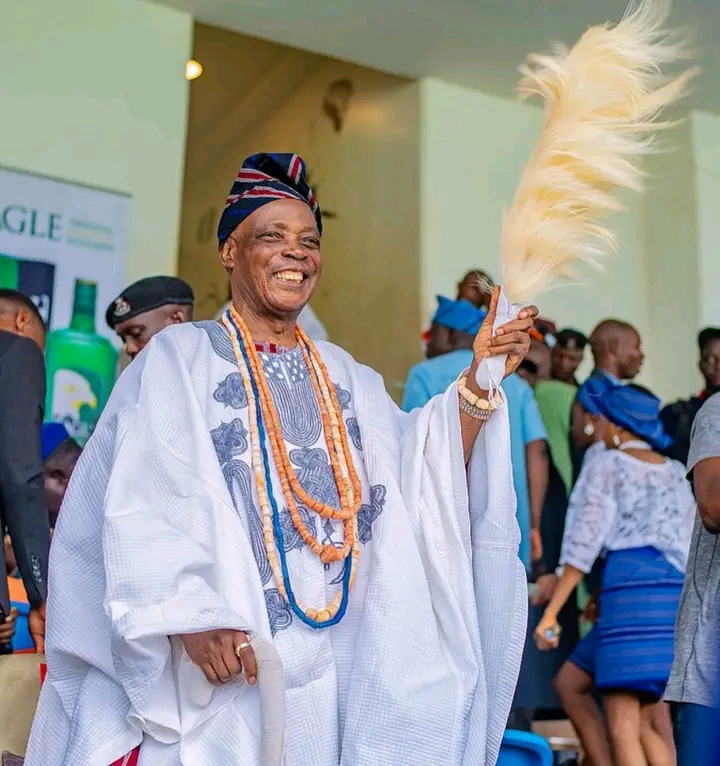
Let us begin with what should never be in dispute: Oba Rashidi Adewolu Ladoja is our father. At 82, and having completed his first year on the revered throne of the Olubadan of Ibadanland, he deserves our respect, prayers and good wishes. His contributions to Oyo State and Ibadanland, including his years as Governor and Senator, remain part of the political history of our people. His position as Olubadan is, however, bigger than partisan politics, and every Ibadan son and daughter should respect the institution regardless of political affiliation.
But the question that naturally arises from the article is whether respect should be a one-way street.
The writer takes exception to the fact that Governor Seyi Makinde did not publicly celebrate or issue a birthday message to the Olubadan on his 82nd birthday and interprets this as evidence of ingratitude. It is perfectly legitimate for anyone to express disappointment over the absence of a public birthday message. However, moving from that omission to the conclusion that the Governor deliberately demonstrated contempt, disrespect or ingratitude requires evidence of such intention.
There is another dimension that should also be considered if we genuinely want to have a balanced conversation.
When Governor Seyi Makinde was recently honoured with a traditional title in Ibarapaland, did the Olubadan pay him a courtesy visit? The Governor and his wife were honoured with the titles of Aare Asoludero of Ibarapaland and Yeye Aare Asoludero respectively at the Eleruwa Palace in Eruwa. If the argument is that the Governor must demonstrate respect by personally acknowledging every important occasion involving the Olubadan, then should the same standard not apply in the other direction?
If the Olubadan did not visit the Governor on that occasion, should we therefore conclude that the Olubadan disrespected the Governor?
Certainly not.
So, why should the absence of a public birthday message automatically become proof that Governor Makinde has disrespected the Olubadan?
What exactly is the Governor’s fault?
This is a legitimate question because public discourse should not operate with two different standards. If courtesy is important, let it be important to everyone. If respect is important, let it be mutual. If public acknowledgement is a measure of respect, then the same yardstick should be applied consistently.
It is also important not to forget the Governor’s documented relationship with the Olubadan institution. Governor Makinde attended the coronation of Oba Ladoja as the 44th Olubadan of Ibadanland in September 2025 and participated in the presentation of the staff of office. That was not an insignificant gesture. The Governor publicly acknowledged the importance of the occasion and prayed for a successful reign.
It therefore becomes difficult to reduce the relationship between the Governor and the Olubadan to a narrative of contempt or hostility simply because of the absence of a birthday message.
There is also no need to deny or diminish the political role played by Chief Rashidi Ladoja in Governor Makinde’s emergence in 2019. His contribution to the political coalition that produced that victory deserves acknowledgement. History should be honest and should give credit where credit is due.
However, political support does not create permanent ownership of another person’s political career.
Oba Ladoja supported Makinde at a particular period in Nigeria’s political history. Subsequently, their political interests diverged. That is politics. Political alliances change, friendships evolve and circumstances alter. None of these necessarily translates into personal hatred or disrespect.
Similarly, Governor Makinde’s position as Governor does not make him the political owner of the Olubadan institution. Both men have independent histories, responsibilities and identities. One can acknowledge Oba Ladoja’s contribution to Makinde’s political journey without demanding that every action of the Governor thereafter must be measured against a permanent political debt.
Gratitude is noble, but gratitude should not be transformed into political ownership.
The same principle applies to the traditional institution. The Olubadan should remain the father of all Ibadan people. He should be father to PDP members, APC members, APM members, ADC members, Labour Party members and people who belong to no political party at all. Every political candidate should be able to approach the Palace with respect, and every candidate should be regarded as a son or daughter of the land.
This is particularly important as Oyo State gradually approaches another political season. The Palace should remain a place where political differences are put aside and where all candidates can receive traditional goodwill without the perception that the institution belongs to one political camp.
Governor Makinde himself, while speaking during his recent traditional title ceremony in Ibarapaland, called on traditional rulers to remain above partisan politics and accommodate every candidate seeking their blessings. That principle is worthy of universal application.
Political disagreement is not necessarily disrespect.
Governor Makinde and Oba Ladoja have not always agreed politically. That is not unusual in a democratic society. Oba Ladoja has his political history and Makinde has his own political journey. Their paths have crossed at different times, sometimes in alliance and sometimes in disagreement.
What should matter is that political disagreement does not become an excuse to undermine the dignity of the traditional institution, just as traditional authority should not become an instrument for questioning the legitimacy of an elected government.
At 82, Oba Rashidi Adewolu Ladoja deserves honour. He deserves the prayers of Ibadan people. He deserves the dignity attached to the throne of the Olubadan. But the dignity of that throne is best preserved when it is kept above partisan political battles.
At the same time, Governor Seyi Makinde should be judged by his documented actions and public record rather than assumptions about his motives.
If the allegation is simply that the Governor did not publicly issue a birthday message, let us say so plainly. If there is evidence that he deliberately insulted or disrespected the Olubadan, let such evidence be presented. But an omission should not automatically be converted into an intention.
The people of Ibadan deserve a mature conversation.
We can praise Oba Ladoja without condemning Makinde. We can acknowledge Oba Ladoja’s contribution to Makinde’s political journey without portraying the Governor as permanently indebted to him. We can respect the Governor without diminishing the Olubadan. We can defend the Palace without turning every political disagreement into a palace-versus-Government House narrative.
The Olubadan is our father. The Governor is the elected Governor of Oyo State. Both offices deserve respect, but neither office requires the other to surrender its independence.
Perhaps, therefore, the more important question is not simply why Governor Makinde did not publicly celebrate Oba Ladoja’s 82nd birthday.
The bigger question is whether we can demand mutual respect while applying the same standard to everyone.
That is the standard Ibadan deserves.
And that is the kind of mature, peaceful and united Ibadan that all of us should work to preserve.