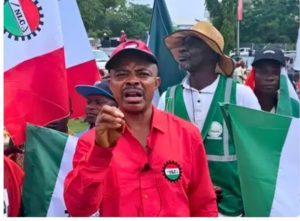
When Democracy Is Killed By Those Who Claim To Defend It || By Dr Peter Akande
By Dr Peter Akande
When democracy is killed, it does not always happen through a military coup d’état. There may be no soldiers on the streets, no tanks surrounding government houses and no announcement suspending the Constitution. Sometimes, democracy is killed quietly by those who loudly claim to be its defenders. It is weakened when political opponents are threatened, when elected governments are targeted through political manoeuvring, when institutions are allegedly deployed selectively against opponents, when traditional institutions are dragged into partisan politics and when politicians who once complained about political victimisation become participants in the same practices they previously condemned.
That is the danger Nigeria must confront today.
The issue is particularly important in Oyo State, where the political temperature is rising ahead of the 2027 elections. There is nothing wrong with political competition. Indeed, competition is essential to democracy. The APC has every right to challenge the APM administration in Oyo State, just as the APM and other parties have the right to challenge APC administrations elsewhere. The electorate must have choices.
But there is a fundamental difference between defeating a government at the ballot box and attempting to remove it through political pressure, intimidation, manipulation or alliances outside the democratic process.
The people of Oyo State must be allowed to decide who governs them.
That principle should be non-negotiable.
There have been allegations and political claims that certain individuals, including some persons connected to traditional circles, have participated in efforts aimed at undermining the sitting governor of Oyo State. These are serious allegations and should be established by evidence rather than merely repeated as political propaganda. However, if the reported revelation attributed to the Speaker of the Oyo State House of Assembly concerning attempts to remove the sitting governor is accurate, then it deserves far more serious attention than the applause and political celebration it has reportedly received in some quarters.
The disturbing question is not simply who is behind the alleged attempt. The bigger question is why anybody should believe that an elected governor should be removed through political engineering rather than through the constitutional and electoral process.
What makes the situation even more disturbing is the alleged involvement or support of elements within the traditional institution.
Traditional rulers occupy a special place in Yoruba society. They are expected to be custodians of culture, history, peace and communal values. They should therefore stand above partisan political warfare. They may have personal opinions as citizens, but the institution they occupy must not become an extension of any political party.
If traditional institutions become instruments for determining which elected politician survives politically, then we have crossed a dangerous line.
The throne is bigger than the politician.
The institution is bigger than the political party.
And the traditional ruler must remember that today’s political ally may become tomorrow’s political opponent.
It is therefore disappointing when some Ibadan elders appear to applaud what should instead provoke serious questions about the future of democracy. What exactly are we celebrating? If an elected governor can be politically removed because some powerful individuals are dissatisfied with him, what prevents the same machinery from being used against another governor tomorrow?
Democracy cannot be defended selectively.
You cannot defend democracy when your candidate is the victim and celebrate its manipulation when your political camp appears to be the beneficiary.
That is precisely where the behaviour of some Nigerian politicians becomes relevant.
Nyesom Wike, for example. Wike’s political career is one of the clearest illustrations of how Nigerian politics can move from fierce party loyalty to extraordinary political realignment. He rose within the PDP and became one of its most powerful figures. Yet his conflict with the PDP leadership following the 2022 presidential primary eventually produced an alliance with the APC-led federal establishment.
The Rivers crisis became an extraordinary test of Nigerian democracy. In March 2025, President Bola Tinubu declared a state of emergency in Rivers State and suspended Governor Siminalayi Fubara, his deputy and the state House of Assembly for six months. The federal government defended the action as necessary to prevent anarchy amid the political crisis and pipeline vandalism, while critics argued that suspending elected officials created a dangerous constitutional precedent. The emergency rule was eventually lifted in September 2025 and the elected officials were reinstated.
Whatever one’s political position, the Rivers experience should concern every democrat.
The central issue is not whether one likes Wike or Fubara. It is whether political disagreements should ever become so powerful that the institutions of government are placed at risk.
Wike himself had once been the victim of intense political battles. Yet his subsequent political influence in the struggle involving his successor has led many Nigerians to ask whether yesterday’s victim can become today’s participant in the very political culture he once resisted.
That is the irony of Nigerian politics.
A politician can condemn political godfatherism when it works against him and later defend political influence when it works in his favour.
A politician can demand institutional independence when in opposition and celebrate institutional pressure when his political allies control the system.
A politician can complain about political victimisation today and participate in political arrangements that others describe as victimisation tomorrow.
This is not democracy.
It is political convenience.
The same concern can be extended to Ayodele Fayose. Fayose’s political career has been built around the PDP, but his recent political relationship with the APC-led establishment has generated considerable debate. In April 2026, Fayose appeared at an APC campaign rally in Ekiti while remaining publicly associated with the PDP, an episode that illustrates the increasingly fluid boundaries of Nigerian partisan politics.
Again, there is nothing inherently unconstitutional about politicians engaging across party lines. But democracy becomes morally weak when party identity and political principles can be abandoned whenever political convenience demands it.
The question Nigerians should ask is simple: What does a political party actually stand for if its leading figures can attack an opponent today and embrace the same political establishment tomorrow?
The problem is not Fayose alone.
It is the political culture.
It is the culture that tells politicians that there is no permanent principle, only permanent interest.
It is the culture that tells politicians that today’s enemy can become tomorrow’s ally if the political price is right.
It is the culture that makes political power more important than political conviction.
And it is this culture that is gradually killing democracy without a coup d’état.
Another disturbing aspect of Nigeria’s political environment is the increasing use of threatening political language against opposition figures. Peter Obi, for instance, has become one of the most prominent opposition voices in the country. His criticism of the APC-led federal government has made him a major figure in the 2027 political contest.
In January 2025, APC National Publicity Secretary Felix Morka made remarks about Obi that generated widespread concern and were interpreted by some as threatening. Morka subsequently denied threatening Obi’s life.
The important point is not to declare a threat where the speaker denies making one. The important point is that political language has consequences.
When a powerful ruling-party spokesman makes statements that opposition supporters interpret as threatening, the responsible response should be clarification, restraint and reassurance—not escalation.
This is particularly important because similar rhetoric is now being reported and discussed across Oyo State in relation to opposition politics and Peter Obi’s supporters. Political opponents must not be threatened simply because they support a different presidential candidate.
If APC believes Peter Obi is politically weak, it should defeat him with superior arguments.
If APC believes his policies are inadequate, it should expose the weaknesses.
If APC believes its own record is better, it should present the evidence.
That is democracy.
But if the response to opposition becomes threats, intimidation or attempts to silence critics, then the ruling party risks weakening the very democracy that gives it legitimacy.
The same principle applies to Oyo State.
If APC believes Governor Seyi Makinde has failed, the party should tell Oyo voters precisely where he has failed. It should present an alternative programme. It should produce a candidate who can convince the people. It should campaign across the 33 local government areas. It should go to the streets, markets, universities, professional associations, traditional communities and rural areas.
Then let the people decide.
That is the legitimate route to power.
Not palace manoeuvres.
Not threats.
Not political intimidation.
Not attempts to weaponise institutions.
Not secret arrangements to remove an elected government.
The danger becomes even greater when law-enforcement and anti-corruption agencies are perceived as political weapons.
EFCC and ICPC have legitimate statutory responsibilities. They should investigate corruption wherever credible evidence exists. Nobody should be above the law simply because he belongs to APC, APM, Labour Party, ADC or any other organisation.
But the agencies must also protect themselves from the perception that investigations are selectively used against political opponents.
If a politician is guilty, prosecute him.
If the allegation is false, clear him.
If evidence exists, let the courts decide.
What Nigeria must never accept is the idea that joining the ruling party provides political immunity.
This is why the statement attributed to a former APC national chairman that, in essence, “join APC and all your sins are forgiven” has such a disturbing democratic implication. If that statement was intended literally or politically, it represents precisely the kind of mentality that destroys public confidence in democratic institutions.
No political party should be a sanctuary for alleged wrongdoing.
Joining APC should not make a corrupt person innocent.
Joining APM should not make a corrupt person guilty.
Joining Labour Party should not make someone a saint.
The law should not ask which political party you belong to before deciding whether justice should be done.
Otherwise, what are we teaching young Nigerians?
Are we teaching them that accountability depends on political affiliation?
Are we teaching them that political defection can erase yesterday’s wrongdoing?
Are we teaching them that the quickest route to political survival is to join whichever party controls the government?
If that becomes the dominant philosophy, then democracy has already begun to lose its moral foundation.
There is also a dangerous misconception that anti-corruption agencies should be used to silence opposition. If political actors genuinely believe that politicians join the ruling party to escape investigations or political pressure, the long-term effect is devastating.
It creates a political environment in which people do not defect because they believe in a new ideology but because they fear the consequences of remaining in opposition.
That is not democratic persuasion.
That is political coercion.
And once political actors become convinced that opposition carries personal danger while joining the ruling party provides protection, the multiparty system becomes progressively weaker.
This is how one-party dominance can emerge without formally abolishing opposition parties.
The opposition still exists.
Its offices are still open.
Its flags are still flying.
Its candidates can still campaign.
But its politicians are gradually pressured, intimidated, divided or attracted into the ruling establishment.
The result is democracy in appearance but political monopoly in substance.
Oyo State must reject that culture.
The state has a long and proud history of political debate. Ibadan in particular has played an important role in Nigeria’s political development. It produced fierce political contests, powerful intellectuals and political movements that were not afraid to challenge authority.
That heritage should not be replaced by political sycophancy.
Ibadan elders should not clap for political madness merely because it is directed against a government they dislike.
Traditional rulers should not be converted into political campaigners.
Politicians should not use traditional institutions as weapons against opponents.
And political parties should not mistake the silence of citizens for consent.
The coming elections should be a contest of ideas.
APC should tell Oyo people what it will do.
APM should defend its record.
ADC, Labour Party and other parties should present their alternatives.
Candidates should debate.
The media should investigate.
Traditional rulers should maintain neutrality.
Security agencies should remain professional.
Anti-corruption agencies should act independently.
And citizens should be allowed to choose freely.
That is democracy.
The greatest threat to democracy is not always a soldier carrying a rifle. Sometimes it is a politician carrying a party card.
Sometimes it is a godfather carrying political influence.
Sometimes it is an elder applauding the removal of an elected leader because he belongs to the wrong political camp.
Sometimes it is a traditional ruler who forgets that the throne belongs to the people and not to any political party.
Sometimes it is an institution that becomes afraid to investigate those in power but eager to pursue those outside power.
Sometimes it is the opposition politician who abandons every principle he once defended because political circumstances have changed.
And sometimes it is the citizen who remains silent because the victim is somebody he dislikes.
That is how democracy dies.
Not necessarily in one dramatic moment.
But gradually.
Quietly.
Institution by institution.
Principle by principle.
Until one day we discover that elections still exist but genuine political choice has disappeared.
Nigeria does not need another military coup. Nigeria needs politicians who understand that power is temporary, institutions are permanent and political opponents are not enemies of the state.
Wike should remember the lessons of the political battles he once fought.
Fayose should remember that political consistency matters.
APC leaders should understand that winning political battles is not the same as strengthening democracy.
APM and other opposition parties should stop waiting for the ruling party to destroy itself and instead build credible democratic alternatives.
Traditional rulers should remain custodians of culture, not political combatants.
And Oyo people must insist that the ballot box—not the palace, not the godfather, not the political fixer and not the security agency—must determine who governs them.
The question before Nigeria is therefore not simply whether democracy is still alive.
The question is whether we are protecting its soul.
Because democracy can be killed by those who claim to defend it.
And when that happens, there may be no soldiers to blame.
There may be no tanks to photograph.
There may be no coup speech to condemn.
There will only be politicians, institutions and citizens who allowed the democratic spirit to disappear while insisting that democracy was still alive.
That is the danger Oyo State—and Nigeria as a whole—must reject.