The Silence Of The Presidency And APC: Are We Really Practising Democracy ? || ▪︎ By Dr Peter Akande
By Dr Peter Akande
I remember when I was young, my father used to say, “Ìjímàrè sógi gún, kò má…” — a Yoruba expression often used in the Southwest when something, someone, or a situation begins to go seriously wrong. The word “Ìjímàrè,” as my father used it, was not necessarily about a particular individual; it was a figurative reference to those who were expected to know better but whose actions or silence allowed things to deteriorate. Today, that old expression keeps coming back to my mind whenever I look at the conduct, statements and reactions of some members of Nigeria’s political elite, particularly within the ruling All Progressives Congress (APC). When those entrusted with political leadership begin to tolerate actions that undermine fairness, restraint and respect for the choices of citizens, one is compelled to ask: where is the conscience of leadership?
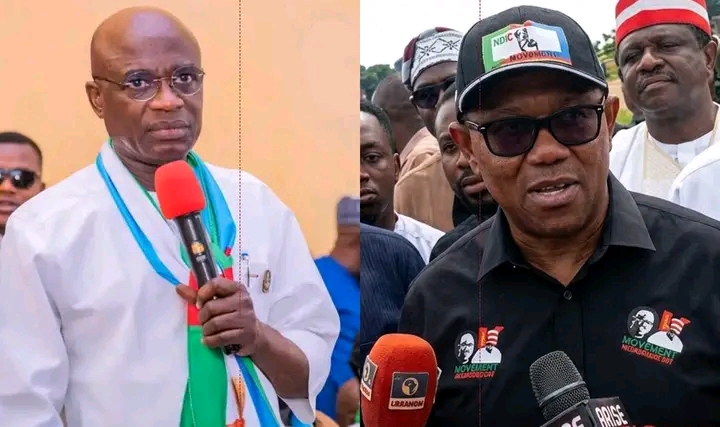
The recent report that Peter Obi’s convoy was allegedly prevented from entering parts of Benue State by suspected political thugs should therefore not be dismissed as just another episode in Nigeria’s increasingly bitter political competition. The allegation deserves a transparent investigation, and if those responsible are identified, the law should take its course. No presidential candidate, opposition politician or ordinary Nigerian should be prevented from travelling, campaigning or meeting citizens through intimidation or violence. Democracy cannot function properly where political competition is accompanied by the use of force.
What is particularly troubling is the silence that often follows such incidents. When an opposition figure makes an allegation of political intimidation, Nigerians expect the Presidency and the ruling party to demonstrate leadership by condemning violence unequivocally and demanding that the appropriate security agencies establish the facts. Silence may not necessarily mean approval, but persistent silence can create the impression that some forms of political misconduct are tolerated when they serve particular interests.
This is why the issue must not be viewed in isolation. Nigerians have witnessed several statements and developments that raise legitimate questions about the nature of political competition ahead of 2027. In Osun State, Senator Francis Fadahunsi was reportedly invited by the police over viral comments interpreted as threatening or inciting violence against members of the Accord Party. The important question now is not simply whether he was invited, but what happened afterwards. Was the matter investigated to its logical conclusion? Was any finding made? Was the public informed of the outcome? In a democracy governed by law, serious allegations should neither be buried nor selectively pursued.
Then comes the language of “delivery” in Nigerian politics. Nyesom Wike has spoken about his intention to “deliver” Rivers State and the Federal Capital Territory to President Bola Tinubu in 2027. Of course, politicians are entitled to mobilise support for their preferred candidates. But there is an important democratic distinction between mobilising voters and speaking as though voters are political possessions that can be delivered by a political godfather. Rivers people, FCT residents and Nigerians generally are not the property of any politician. They have the constitutional right to listen to competing candidates, make their own choices and vote according to their conscience.
The same question arises when political leaders speak about elected officials as though their continued tenure depends on delivering electoral victory for a particular party. Governor Francis Nwifuru of Ebonyi State was reported to have warned that a local government chairman who failed to win his local government for the APC in 2027 would be removed. Such a statement deserves serious public discussion because elected local government chairmen should be accountable to the people and the law, not simply to the electoral expectations of a superior political authority. If political office becomes conditional upon producing predetermined electoral outcomes, then the independence of elected institutions and the freedom of voters inevitably become subjects of concern.
There is also the continuing controversy involving the National Union of Road Transport Workers and the suspension of its activities in Osun State. MC Oluomo reportedly challenged the authority of the state government to suspend NURTW activities, arguing that the union is not under the control of any individual state governor. Whatever the legal merits of that argument may be, the appropriate place to resolve such a dispute is through the Constitution, legislation, courts and lawful administrative procedures—not through political muscle, street power or intimidation. No organisation, however influential, should be above the law, just as no elected government should be above the law.
These incidents may appear unrelated, but they point to one fundamental question: are political actors becoming too comfortable with the language and culture of political control? Democracy is not merely about conducting elections every four years. It is about the freedom to campaign, the freedom to associate, the freedom to disagree, the freedom to vote without intimidation and the assurance that political power will change hands through the ballot rather than through coercion.
This is where my father’s old expression, “Ìjímàrè sógi gún, kò má…”, becomes particularly relevant to the political moment. When something is going wrong, responsible people should not wait until the damage becomes irreversible before speaking. The political elite must understand that democracy is bigger than APC, PDP, Labour Party, ADC, NDC or any other political platform. Parties will come and go. Politicians will rise and fall. Governments will change. But the democratic institutions we build today will determine the kind of country our children inherit tomorrow.
The Presidency and the APC therefore have a responsibility to speak clearly whenever allegations of political violence, intimidation or abuse of political influence arise. That responsibility is not an admission of guilt. It is leadership. Condemning political violence does not mean endorsing the opposition; it means defending the rules of the political game. Calling for investigation does not mean supporting an opponent; it means supporting the rule of law.
The same standard must apply to everyone. If a member of the APC is accused of making inflammatory statements, the matter should be investigated. If a PDP, ADC, Labour or NDC supporter is accused of violence, the same law should apply. If a political appointee abuses public power, accountability should follow. If an opposition politician violates the law, the law should equally take its course. Selective outrage is not justice, and selective silence is not leadership.
As we approach 2027, Nigerians deserve a political environment where candidates compete with ideas, records, competence and vision—not thuggery, intimidation, threats or claims that one politician can “deliver” millions of citizens as though voters were political merchandise.
The ballot box must remain more powerful than the thug. The Constitution must remain more powerful than the political godfather. The law must remain more powerful than the street. And the Nigerian voter must remain more powerful than every political machine.
Nigeria belongs to all of us, not to any political party. If something is going wrong, this is the time to speak—not after democracy has been weakened beyond repair.