GSM and the Swamp of Political Plotting: Who Is Afraid of the People’s Verdict?
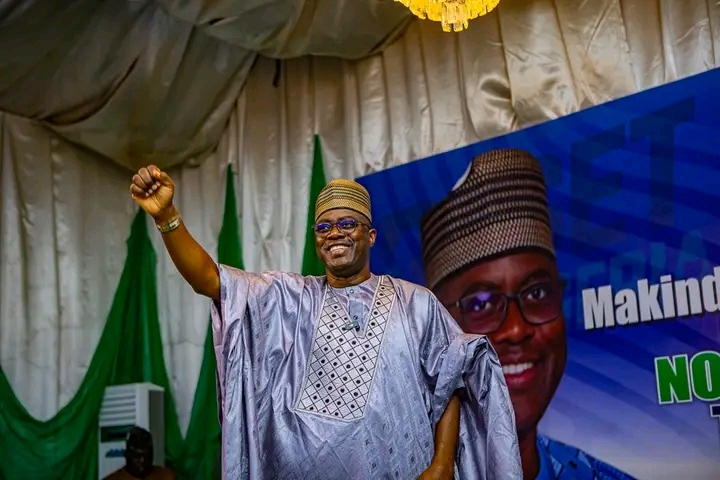
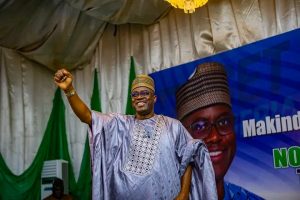
Nigeria’s political season has once again entered that familiar territory where policy arguments sometimes give way to accusations, counter-accusations, misinformation, and increasingly provocative rhetoric. In Oyo State, Governor Oluseyi Makinde’s emergence as a presidential aspirant has inevitably intensified political scrutiny around him and the candidates associated with his political platform APM. What they can’t get in the swing, the opponents want it in a roundabout.
The legitimate question, therefore, is not whether political opponents should criticise Makinde. They have every right to do so. The more important question is whether the contest will be conducted through verifiable facts, competing programmes and persuasive arguments—or through unsubstantiated claims, inflammatory rhetoric, religious insinuations, caricatures and deliberate attempts to manipulate public perception through the social media platforms?
One recent controversy illustrates the importance of evidence in political discourse. FCT Minister Nyesom Wike was reported to have said that the federal government provided ₦50 billion to Oyo State for the upgrade of the Ibadan Airport. Makinde subsequently rejected the claim, stating that the project was being financed entirely by the Oyo State Government. The competing claims are now part of the public record and can be subjected to documentary verification rather than political speculation.
This is precisely why political communication must be separated from political propaganda. A claim does not become established fact merely because it is repeated across television programmes, rallies, blogs, or social media platforms. Conversely, an allegation against an opponent should not automatically be dismissed simply because it is politically inconvenient so far it is issuebased and verifiable .
The same principle applies to allegations about coordinated campaigns against GSM . Where there is clear evidence of organised misinformation, intimidation, incitement, or manipulations, it could not be wished away .
The metaphor of Un-su Kim’s ” The Plotters” is therefore instructive, although it belongs to fiction. The novel depicts unseen actors manipulating events from behind the scenes.
Nigeria has experienced the consequences of electoral misinformation, intimidation, violence, and other abuses in previous elections.
Unquestionably, all have the responsibility of preventing inflammatory rhetoric from becoming catalysts for disorders.
The electorate also deserves something better than being treated merely as an audience for political theatre. Voters should be allowed to examine records, programmes, promises, and performance and then make their choices freely.
The Yoruba wisdom that ìmọ̀ ènìní kì í dálẹ̀—the morning dew does not last throughout the day—offers a useful reminder about the temporary nature of many political calculations. Political narratives may dominate today’s conversation, but evidence and public memory ultimately have their own way of testing them. You may win the arguments against GSM, you cant win the debate.
The challenge before Oyo State is, therefore, straightforward: let political competition remain competition. Let candidates defend their records. Let opponents challenge those records with evidence. Let the media verify before amplifying. Let citizens question before believing.
It will be recalled that in its final report titled 2007 election whose mandate? the frontline Non governmental organisation, the women environmental programme ( WEP), based in Abuja highlighted, violence, intimidation, misinformation, irregularities, Mobilisation of the youth for violence , improper conduct of security officials etc as cugs in the wheels of 2007 election. The pertinent question now is, ” Are we not planning for a reenactment of the scenario in 2027 election?” Why can’t they allow Seyi Makinde to breathe and allow the electorates to make their choices. Who are the faceless people sponsoring chaos and inciting the public?
Above all, let the electorate decide.