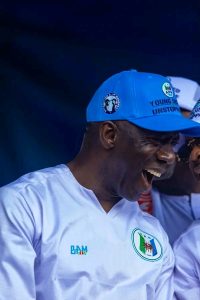
Bimbo Adekanmbi: Taming Political Corruption Through Responsible Prudence || ▪︎ By Isiaka Kehinde (Mr Ethics)
By Isiaka kehinde
31/08/2026
One phenomenon that has become increasingly conspicuous at this defining moment in our political journey is the penchant for making extravagant donations as a means of impressing the public. While philanthropy is ordinarily commendable, the political deployment of conspicuous generosity deserves closer scrutiny. A donation made primarily to advertise personal financial capacity, cultivate political loyalty, or manipulate public sentiment is not necessarily an expression of empathy; it may, in fact, constitute a subtle form of political corruption.
The distinction is crucial. Genuine empathy seeks to alleviate suffering and address the conditions that produce it. Political largesse, by contrast, can become an instrument for purchasing goodwill, manufacturing popularity, and converting temporary generosity into electoral capital. When citizens are persuaded to measure leadership by the size of a candidate’s donation rather than by the quality of his ideas, competence, integrity and capacity for sustainable governance, politics degenerates into a bazaar where influence is effectively auctioned to the highest bidder.
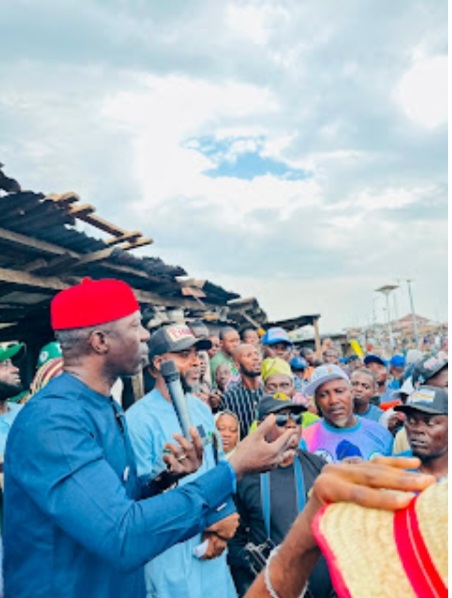
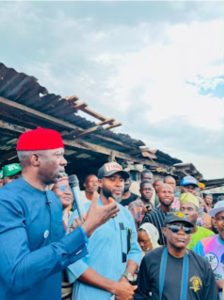
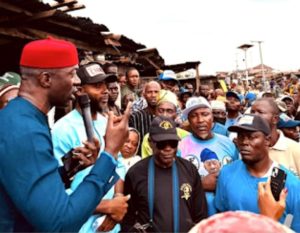
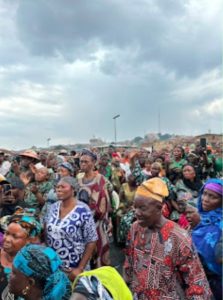
This is precisely where the danger lies. As development literature has long been observed, corruption can distort the relationship between electoral success and performance in office. When questionable financial practices become an effective route to electoral victory, the incentive to resort to similar practices after assuming office inevitably increases. The cycle becomes vicious: money is deployed to win power, and power is subsequently exploited to recover the resources expended in acquiring it. An example may suffice to illustrate this trend. During the inferno at Bode market, politicians were the first port of call that were invited to the scene – not to see the debris but to cough out money. Bimbo Adekambi, out of genuine feelings, donated 2m instantly, which he hoped that ordinarily wiiil be enough enough to put the structure together, and he Councelled them on how to averse recurrence Pure Logics dictates that if they need extra assistance, they would have asked him,or so he thought. When he was about to leave ,another politician from the opposition camp hurriedly visited the scene, promising a whopping 25 million as his own assistance. In a saner clime, it would have been rejected outright with a big question on the hidden motifs of such unusual action.
That is why every spectacular political donation ought to provoke a simple but fundamental question: Will this generosity continue after the election—and from whose resources will it be financed?
The electorate must learn to distinguish between a politician who merely treats the symptoms of a social problem for political visibility and a leader who possesses the intellectual discipline to confront the problem at its roots. An act of showmanship should be separated from financial prudence . It’s high time we shun away political corruption, which was once defined by Marcin walensky, which is aimed to draw a line between campaign and political funding . He states that ” many extra party actors are involved in political competition with the objectives of shaping political agendas, influencing electoral debate and outcomes,” He is very correct .
This is where Bimbo Adekambi presents a markedly different political proposition.
Rather than participating in a political bazaar of competitive donations, Adekambi’s philosophy is better understood as an invitation to interrogate the underlying causes of our problems. Where others may seek applause by repeatedly distributing palliatives, he would rather ask the more consequential question: Why does the crack keep appearing, and what must be done to prevent it from recurring?
That is the difference between political charity and political responsibility; between managing symptoms and repairing systems; between spending money for applause and deploying public resources with foresight and prudence.
Leadership is not a contest in financial flamboyance. The true measure of a leader is not how much he can give away before an election, but how responsibly he can manage the collective resources entrusted to him after winning one.
Financial prudence, therefore, is not miserliness. It is a virtue of governance.
Oyo State needs leadership that understands the difference between temporary relief and sustainable emergency funding.
We need to venture into the donor’ s past and ferret out if such donations are habitual act or suddenly made to earn unsuspecting voter’s sympathy. 2027 election, will suggest which is the best form of philanthropy. All Eyes are on Bimbo Adekambi.