OYO POLITICS: Selective Criticism Won’t Erase Makinde’s Achievements — Dr Peter Akande Replies Wale Ajani
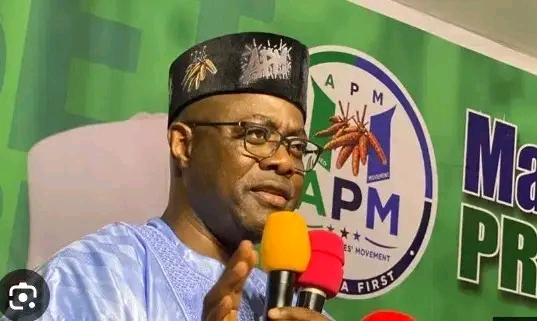
Dr Peter Akande
I have carefully read Wale Ajani’s article titled “How Seyi Makinde’s ‘Reset Nigeria’ Gospel Dies in Oyo.” As an indigene of Oyo State and someone who believes in objective political analysis, I find the article interesting but fundamentally unconvincing. My concern is the apparent determination to dismiss Governor Seyi Makinde’s achievements while magnifying every perceived shortcoming. There is nothing wrong with criticising a governor. Indeed, constructive criticism is essential to democracy. However, when criticism becomes selective, it ceases to be objective political analysis and begins to resemble a predetermined political agenda.
My first question to Wale Ajani is this: Must a governor solve every problem in his state before he can aspire to contribute to national leadership? Is Oyo State expected to become a paradise before its governor can discuss the future of Nigeria? Which Nigerian state has achieved perfection? Can any governor honestly claim to have solved every problem confronting his people?
Even the Federal Government has not fulfilled all its promises to Nigerians. Does that mean President Bola Ahmed Tinubu should abandon his political agenda and stop asking Nigerians for more time?
President Tinubu came into office with enormous promises and expectations. Nigerians were promised economic recovery, improved security, better living conditions, employment opportunities and a renewed national economy. Unfortunately, many of these promises remain unfulfilled, while ordinary Nigerians continue to grapple with economic hardship and rising living costs. Yet, the President and his supporters continue to appeal to Nigerians to give the administration more time. If the President can still seek public confidence despite the numerous challenges confronting his administration, why should Governor Makinde be disqualified from discussing national renewal simply because Oyo State still has challenges? Is the standard of political assessment different depending on whose political interest is involved?
This is where the argument of selective criticism becomes relevant. I remember the administration of the late former Governor Abiola Ajimobi. His government had serious disagreements with organised labour, and his handling of workers’ affairs attracted considerable criticism. His relationship with some traditional institutions also generated controversies, particularly concerning the dignity and treatment of traditional rulers. Yet, despite these controversies and criticisms, Ajimobi was not prevented from contesting for the Senate. Nobody suggested that he had to solve every problem in Oyo State before seeking another political office. Why, therefore, should Makinde be subjected to a different standard?
On youth development and scholarships, Wale Ajani asks where the revolution is. That is a legitimate question, but it requires more than rhetoric. Youth development must be assessed through education, skills acquisition, entrepreneurship, employment opportunities, access to technology and the general economic environment. It is intellectually dishonest to suggest that an administration has achieved nothing simply because its programmes do not fit one’s preferred definition of empowerment. If there are shortcomings, let us identify the programmes that have failed, the institutions that have underperformed and the areas requiring improvement. Governance should be assessed through evidence, not sweeping generalisations.
On the civil service, I agree that paying salaries is a constitutional and administrative responsibility. However, let us not forget the historical context. When Makinde assumed office in 2019, he inherited outstanding salary and pension obligations. His administration took steps to address inherited liabilities while maintaining regular payment of workers’ entitlements. Why should this achievement be dismissed simply because paying salaries is an obligation? An obligation that previous administrations struggled to fulfil is still a responsibility that deserves acknowledgement when properly discharged. Beyond salaries, civil service reform should be evaluated through training, promotions, improved working conditions, digitalisation and institutional capacity. If there are specific areas where the government has failed, let them be identified.
Interestingly, the writer attaches considerable importance to the physical appearance of the Government House. Is the beauty of Government House now the ultimate measurement of good governance? Should we assess a governor by the appearance of his office or by the quality of roads, schools, hospitals, public institutions and opportunities available to citizens? The Government House may require attention, but that does not automatically invalidate the achievements of an administration. Public infrastructure and human development deserve greater attention than architectural appearances. More importantly, the ongoing efforts and interventions towards improving the state’s public infrastructure should not be ignored.
On the allegation of one-man control, this is perhaps the most interesting part of the article. Wale Ajani repeatedly uses expressions such as micromanagement, puppets, command and control. But where is the concrete evidence? Which commissioner has been prevented from performing his constitutional responsibilities? Which agency has been incapacitated? Which local government chairman has publicly demonstrated that he cannot discharge his statutory duties because of the governor? If there are specific cases, let them be presented.
Democracy allows criticism, but allegations should not be converted into established facts merely through repetition.
The question of local government administration also deserves serious discussion. Local government autonomy is a constitutional and institutional matter involving financial independence, accountability and the responsibilities of elected councils. Let us examine the actual financial arrangements, statutory responsibilities and performance of local government administrations before arriving at sweeping conclusions. However, it is equally important to recognise that local government autonomy must be assessed objectively across the country, not turned into a convenient weapon against one governor.
My greatest concern is the double standard in our political discourse. Why do some commentators become extremely uncomfortable when Governor Makinde is praised but suddenly become silent when similar questions of accountability are raised against politicians from their preferred political parties? We have seen politicians face serious allegations of corruption and financial impropriety and still retain political relevance and electoral opportunities. The case of former Kogi State Governor Yahaya Bello, who has faced allegations and legal proceedings relating to public funds, reminds us that accountability must apply equally to everyone. Allegations must be determined through due process, not political affiliation.
Allocations are not gifts from politicians to the people. Public funds belong to the people, and every government must account for how such resources are utilised. Nobody should demand accountability from Makinde while providing political immunity to others. If we must interrogate governance, let us interrogate every administration with the same energy, courage and intellectual honesty.
I also find it curious that the writer appears to suggest that Makinde’s national ambition is an attempt to sell an image without substance. The expression “Reset Nigeria” is an aspiration and a political proposition. It does not mean that Oyo State has become perfect. It is an invitation to discuss the kind of leadership, institutions and economic direction Nigeria requires. If Wale Ajani disagrees with Makinde’s vision, he should interrogate the ideas, propose alternatives and present evidence. He should not assume that a governor must first achieve perfection before he is qualified to discuss national development.
Let me make something clear: I am not suggesting that Governor Makinde has solved every problem in Oyo State. He has not. There are challenges in education, healthcare, employment, security and infrastructure that require continuous attention. However, acknowledging these challenges does not mean erasing the progress recorded by his administration. Roads, infrastructure, improved fiscal management, regular payment of workers’ entitlements and other developmental interventions must be considered when assessing his performance.
Wale Ajani should also understand that political ambition is not a crime. President Tinubu is asking Nigerians to give him more time despite the numerous difficulties facing the country.
Former Governor Ajimobi sought another political mandate despite the controversies surrounding his administration. Why then should Makinde’s political aspirations become an offence simply because his critics believe Oyo State has unresolved problems?
As an indigene of Oyo State, I believe we should commend where government performs well and criticise where it falls short. That is the standard of responsible citizenship. We must not turn political disagreement into a campaign of deliberate discrediting. Neither should journalism become an instrument for settling political scores or promoting the interests of undisclosed paymasters.
My final message to Wale Ajani is simple: You cannot erase achievements simply because you disagree with the man who delivered them. You cannot demand perfection from one governor while excusing the shortcomings of another. And you cannot preach accountability selectively and expect the public to take your arguments seriously.
Governor Seyi Makinde should be commended where he has performed well and criticised where he has fallen short. The same standard must apply to President Tinubu, former Governor Ajimobi, former Governor Yahaya Bello and every other political officeholder, irrespective of party affiliation.
Oyo State belongs to all of us, not to political paymasters, sponsored commentators or self-appointed custodians of public opinion.
Let the debate continue, but let facts lead the conversation. Political journalism should be about truth, not vendetta; accountability, not selective outrage; and public interest, not political patronage.