Obasanjo Vs Tinubu: No Comparison, Not Even Close — Dr. Peter Akande
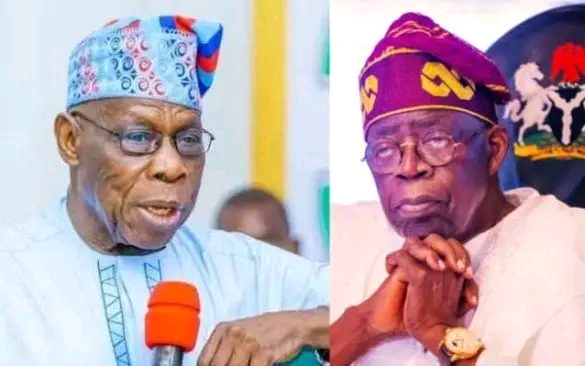
By Dr. Peter Akande
There is a time in the history of every nation when leadership must be assessed not by political sentiments, party affiliations or propaganda, but by the realities experienced by the people. In Nigeria today, one of the most important political debates is the comparison between the administration of former President Olusegun Obasanjo and that of President Bola Ahmed Tinubu. While every administration has its own peculiar circumstances, challenges and opportunities, the differences between the two periods are too significant to ignore.
When Olusegun Obasanjo assumed office as Nigeria’s civilian president in 1999, the country was emerging from years of military rule. Nigeria was heavily indebted, economically weak and internationally isolated. Poverty was widespread, infrastructure was inadequate and the telecommunications sector was virtually inaccessible to the ordinary Nigerian. Yet, within eight years, the Obasanjo administration implemented a number of reforms that changed the direction of the Nigerian economy and laid foundations upon which subsequent administrations continued to build.
One of the most remarkable achievements of the Obasanjo administration was the successful negotiation of Nigeria’s external debt relief. The country had accumulated a huge external debt burden, and the Paris Club agreement eventually provided substantial relief. This was a major economic achievement because it reduced the pressure of external debt servicing and gave Nigeria greater fiscal space. For a country that had been struggling under the weight of its debt obligations, the development represented an important turning point.
Obasanjo also presided over a period of significant economic growth and macroeconomic stability. This does not mean that Nigeria suddenly became a developed country or that poverty disappeared. Far from it. Nigerians still faced hardship, unemployment and inadequate infrastructure. However, there was a sense that the economy was moving in a positive direction and that the country was regaining its place in the international community.
Perhaps the most visible legacy of the Obasanjo years was the telecommunications revolution. The introduction of GSM services in 2001 fundamentally transformed Nigerian society. Before GSM, telephone ownership was largely restricted by the limitations of the old telecommunications system. Obtaining a telephone line could be difficult and expensive. The arrival of private mobile telecommunications operators changed all of that. Within a short period, millions of Nigerians gained access to mobile phones. Traders, students, farmers, civil servants and ordinary families could communicate across the country. The GSM revolution subsequently became one of the foundations of Nigeria’s digital economy.
The exchange rate also presents an important contrast. At the end of the Obasanjo administration in 2007, the naira was trading at approximately ₦125 to the United States dollar. Today, the naira has suffered a dramatic depreciation. While the Tinubu administration inherited an economy with significant foreign-exchange distortions, its decision to reform the foreign-exchange market resulted in substantial short-term pressure on the currency. The consequence has been a sharp increase in the cost of imported goods, education, healthcare, transportation and virtually every aspect of daily life.
The same argument applies to fuel prices. Obasanjo inherited petrol prices that were considerably lower than those at the end of his administration, and his government itself increased fuel prices during its tenure. However, the scale and speed of the increases experienced under Tinubu have been unprecedented in the experience of many Nigerians. The removal of the fuel subsidy was presented as an unavoidable economic reform designed to eliminate an expensive and unsustainable subsidy regime. Yet the immediate consequences have been extremely painful. Transportation costs increased, food prices rose and household purchasing power declined significantly.
This raises an important question: should an economic reform be judged only by its theoretical long-term benefits, or should government also be judged by the suffering it imposes on citizens in the process? Economic reform may be necessary, but the responsibility of government is to ensure that ordinary people are protected from unbearable consequences. Reform without adequate social protection can easily become hardship without hope.
The issue of poverty is equally important. Claims that Nigeria’s poverty rate has risen to almost 90 percent under Tinubu require careful examination because poverty statistics depend on methodology, measurement and the period being considered.
Nevertheless, there can be little argument about the fact that Nigerians are experiencing severe cost-of-living pressures. Food inflation, transportation costs, electricity expenses, school fees, rent and healthcare costs have placed enormous pressure on families. Whether one describes this as poverty, economic hardship or a cost-of-living crisis, the reality is that millions of Nigerians are struggling to maintain their standard of living.
Debt is another area where the contrast is striking. Obasanjo’s administration is remembered for debt relief, particularly the Paris Club arrangement. Today, Nigeria’s debt stock is substantially higher. It is important to acknowledge that much of the present debt was accumulated across several administrations and should not be attributed to Tinubu alone. Nevertheless, the increasing debt burden raises a legitimate question: what are Nigerians getting in return for the borrowing?
Borrowing is not necessarily a bad economic policy. Every serious economy borrows to finance productive investments. The real issue is whether borrowed money is being invested in infrastructure, industry, education, healthcare and other productive sectors capable of generating economic returns and improving the lives of citizens. If borrowing merely finances recurrent expenditure without creating productive capacity, future generations may be left with the burden without the corresponding benefits.
Security provides another area of serious concern. It would be historically inaccurate to suggest that insecurity started under Tinubu. Nigeria experienced serious security challenges under previous administrations, including terrorism, communal conflicts, militancy and kidnapping.
However, the expansion of kidnapping, banditry and violent crime in recent years has made security one of the greatest concerns of ordinary Nigerians. Farmers are afraid to travel to their farms, travellers fear major highways and families live with anxiety about the safety of their loved ones.
This is where the effectiveness of government ultimately matters. Citizens do not experience government through policy documents alone. They experience government through the price of food, the cost of transportation, the availability of jobs, the value of their salaries, the security of their communities and the quality of public services.
To be fair, the Tinubu administration inherited serious economic problems. The country was already facing foreign-exchange shortages, high debt obligations, fuel subsidy costs, declining purchasing power and structural weaknesses. Therefore, it would be intellectually dishonest to blame every current problem exclusively on the present administration. Tinubu did not create all Nigeria’s problems.
However, leadership is ultimately about what a government does with the problems it inherits. The argument that today’s hardship is entirely the fault of previous administrations cannot remain a permanent excuse. At some point, the government must be judged by the results of its own policies.
This is why the comparison with Obasanjo remains relevant. Obasanjo inherited a Nigeria that was heavily indebted and economically troubled, yet his administration was able to secure substantial debt relief, attract telecommunications investment, strengthen economic institutions and create an environment in which the Nigerian economy experienced significant growth. His administration had its own failures, controversies and unpopular policies, but it also produced reforms whose impact Nigerians could clearly see.
Tinubu’s administration, on the other hand, has embarked on some of the most radical economic reforms Nigeria has experienced in decades. The removal of the fuel subsidy and foreign-exchange reforms may have been motivated by legitimate economic concerns. The question is whether these reforms will eventually produce the promised prosperity and whether Nigerians can survive the painful transition.
Ultimately, the debate should not be reduced to whether Obasanjo was perfect or Tinubu is entirely wrong. Neither position would be intellectually defensible. The proper question is which administration has delivered better economic outcomes for ordinary Nigerians and which one has created a more sustainable foundation for the future.
On that basis, there is a strong argument that the Obasanjo years compare favourably with the Tinubu era, particularly in terms of debt relief, exchange-rate stability, telecommunications development and the general economic environment experienced by Nigerians.
History must, however, be allowed to make the final judgment. Political propaganda will eventually disappear, social-media arguments will fade and political parties will change. What will remain is the record of what governments actually did and how their policies affected the Nigerian people.
Obasanjo’s administration gave Nigeria debt relief and the GSM revolution. Tinubu’s administration has given Nigeria aggressive economic reforms whose benefits remain a matter of intense debate while the immediate consequences have been extremely painful for many citizens.
Therefore, the real test is not which politician makes the better speech. It is not who has the largest political structure. It is not who controls the media or social media.
The real test is simple: Are Nigerians better off?
That is the question every government must ultimately answer.
And on the evidence of economic stability, debt management, currency value, telecommunications transformation and the purchasing power experienced by ordinary Nigerians, many Nigerians will continue to argue that the Obasanjo era and the Tinubu era are not comparable.
Not even close.