2027: Presidential Leadership Is Not a Tea Party — Why GSM’s Physical Fitness Argument Matters
Physical activity does not merely strengthen the body; it also enhances mental performance and supports cognitive development. The relationship between physical fitness and intellectual capacity is well established: regular exercise improves cardiovascular health, supports brain function, enhances mood, and may help preserve memory and other cognitive abilities as people grow older. In the demanding world of leadership, physical well-being is not a trivial consideration; it is an important component of sustained performance.
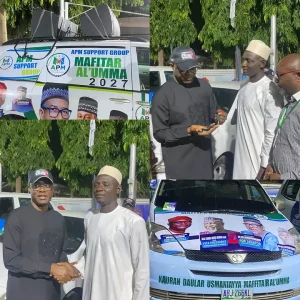
When Governor Seyi Makinde indicated his preference for a successor within a particular age cohort, his position might have appeared vague or even controversial to some political observers. Not everyone understood the deeper consideration behind his remarks. Yet, perhaps, he was drawing attention to a reality that political rhetoric often obscures: age, physical fitness, mental alertness, and the capacity to sustain the rigours of public office are issues that deserve serious consideration. Eventually, the emergence of Bimbo Adekambi, as APM candidate who is imbued with vigour to withstand political rigour, douse all tention.
in leadership recruitment.
Just as the law of diminishing returns reminds us that the effectiveness of an investment may decline under certain conditions, advancing age can bring physiological changes that affect an individual’s energy, mobility, and cognitive functioning. This is not to suggest that ageing automatically diminishes intellectual capacity or renders anyone unfit for leadership. Rather, it underscores the importance of paying attention to overall health, physical agility, mental alertness, and the capacity to withstand the pressures of demanding responsibilities.
Physical fitness can support cardiovascular endurance, mobility, emotional well-being, and healthy cognitive functioning. It may also reduce the risk of certain conditions associated with cognitive decline like incoherence, memory loss or fugue, etc . Consequently, anyone aspiring to govern a large and complex country like Nigeria must be prepared for the physical and psychological demands of the office. An investment in personal well-being is, in many respects, an investment in one’s capacity to serve effectively.
But why must GSM’s well-intentioned counsel so often be misconstrued, interpreted in bad faith, or subjected to unnecessary political colouration?
On a previous occasion, he advised traditional rulers to preserve their dignity by distancing themselves from partisan politics and embracing their responsibility as fathers to all. The advice did not sit well with everyone. Yet, was he not reminding our royal fathers of the importance of neutrality in a politically divided society? A traditional ruler’s moral authority is strengthened when he can rise above partisan interests and remain a unifying force for the entire community.
Similarly, when Makinde spoke about professional excellence in the legal profession, including the significance of experience, the number and quality of cases handled, and the attainment of the rank of Senior Advocate of Nigeria, some observers appeared to interpret his position as though he were speaking a language they could not comprehend. Once again, the substance of his argument seemed to become secondary to the controversy.
surrounding his words.
Now, at his recent town hall meeting in Akure, GSM has reportedly emphasised physical agility as an important consideration for anyone aspiring to become president. His argument, as I understand it, is that a nation already struggling with economic and social challenges needs a leader who possesses the physical stamina and mental alertness to confront its difficulties. A country battling multiple crises can not afford to treat the health and functional capacity of its leader as inconsequential.
To illustrate his point, Makinde reportedly jumped down from the stage unaided and challenged other presidential aspirants to demonstrate a similar feat.
Predictably, some political commentators have turned the demonstration into an occasion for mockery, interpreting it as an attack on older people. Some of those rushing to his defence appear to assume that the governor was referring specifically to their political principal. This reaction raises an important question: must every general observation about leadership automatically be interpreted as a personal attack on a political opponent?
To my mind, such an interpretation risks committing the logical fallacy of a false assumption. A general argument about physical fitness does not, in itself, establish that a particular individual is incapable of leadership. Nor does it follow that anyone who questions the relevance of physical fitness must be defending an unfit candidate.
Physical fitness is not determined by age alone. Equally, age should neither be treated as an automatic disqualification nor used as an excuse to ignore the practical demands of public office. People age differently, and their health, habits, medical circumstances, and levels of physical activity vary considerably. What matters is not simply the number of years a person has lived but the individual’s actual capacity to discharge the responsibilities of leadership.
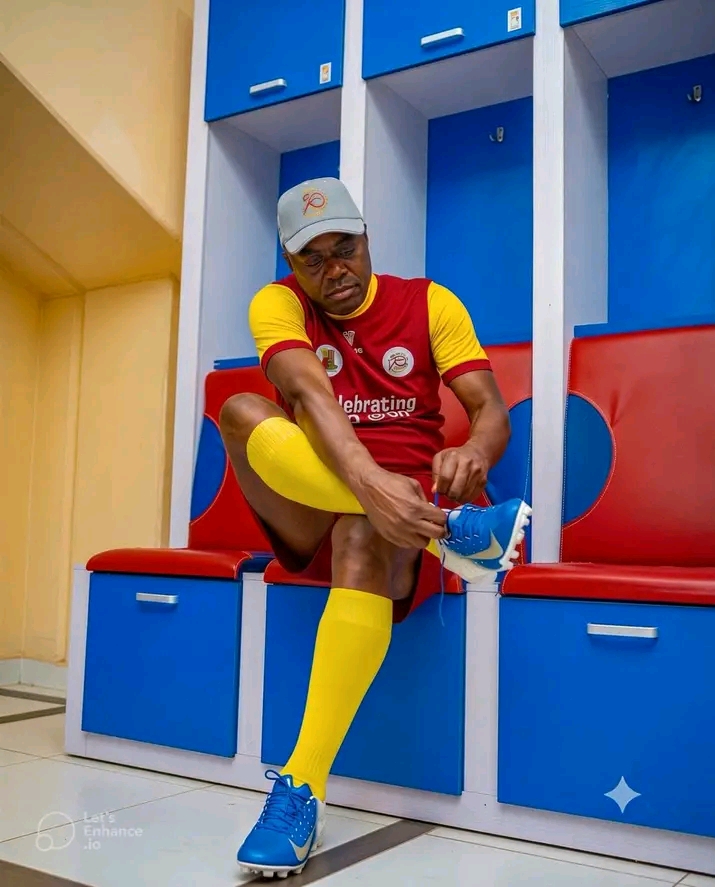
Former President Olusegun Obasanjo ( Ebora Owu) offers an instructive example of the importance of maintaining an active lifestyle. Even in his advanced years, he has remained publicly associated with physical exercise, including playing football. His example reinforces the argument that regular physical activity can contribute to an active and engaged life, irrespective of age.
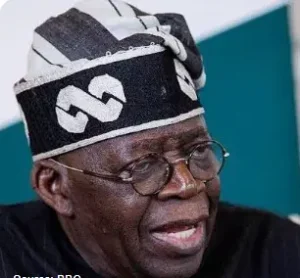
Meanwhile, I have observed some apologists of President Bola Ahmed Tinubu rushing to defend their political principal, almost as though Makinde’s sweeping remarks were directed exclusively at him. But why should a conversation about physical fitness, leadership, and national responsibility immediately degenerate into partisan confrontation?
It is important to distinguish between a political argument and an attack on an individual. Makinde’s demonstration may not be the ultimate test of presidential fitness, and the ability to jump from a stage should certainly not become a qualification for occupying the highest office in the land. Nevertheless, his action draws attention to a legitimate consideration: physical fitness can be an added advantage in a demanding public office, even though it can not, by itself, establish a person’s suitability for leadership.
Presidential leadership is not a tea party. It requires a combination of nature and nurture: sound judgement, intellectual depth, emotional intelligence, political experience, administrative competence, physical stamina, and the capacity for sustained engagement. A president must be able to navigate lengthy meetings, respond to emergencies, attend campaign rallies, engage with complex policy questions with press men, travel when necessary, and make consequential decisions under considerable pressure.
History offers examples of leaders whose health challenges affected their ability to discharge public responsibilities fully. Such examples remind us that the overall well-being of a leader is not merely a private concern; it can have implications for governance, continuity, and national stability.
I am particularly intrigued by a line from the music of the celebrated Fuji musician, Wasiu Ayinde Marshall: “Ẹni bá yó kún, ni ki e gbówó fún.” The precise wording and intended meaning of the lyric deserve to be understood in their original context, but the broader lesson I draw from it is the importance of sound judgement and the need to consider the substance of an issue rather than its superficial appearance.
For me, leadership demands a willingness to confront reality, make difficult choices, and recognise personal limitations. Those who aspire to lead must be prepared to subject themselves to honest scrutiny rather than demand immunity from legitimate questions.
As the 2027 election approaches, our political conversations should become more constructive, issue-based, and intellectually rewarding. We need fewer daily confrontations and more serious discussions about economic recovery, education, healthcare, employment, security, infrastructure, and the general welfare of our people.
For instance, the habit of seizing every available opportunity to attack GSM does little to advance the development of Oyo State or Nigeria at large. Political disagreement is legitimate, but disagreement without substance becomes a distraction from the urgent business of governance.
We must learn to distinguish between criticism that enlightens and criticism that merely provokes. We must also resist the temptation to interpret every public statement through the narrow lens of partisan loyalty.
A democracy flourishes when ideas are examined on their merits, arguments are challenged with reason, and political actors are held accountable without reducing every discussion to personal hostility.
Let us, therefore, focus on developmental issues, not political tissues. Nigeria needs healthy conversations about the qualities, policies, and capabilities required to move the nation forward. We should spend less time manufacturing controversy around every statement by GSM and more time interrogating the ideas that could improve the lives of our people.
After all, the ultimate test of leadership is not how loudly a politician speaks. It is how effectively he serves the people, how wisely he exercises power, and how enduringly his leadership improves the human condition.