Bimbo Adekanmbi and Those Turning Social Media into a Battlefield
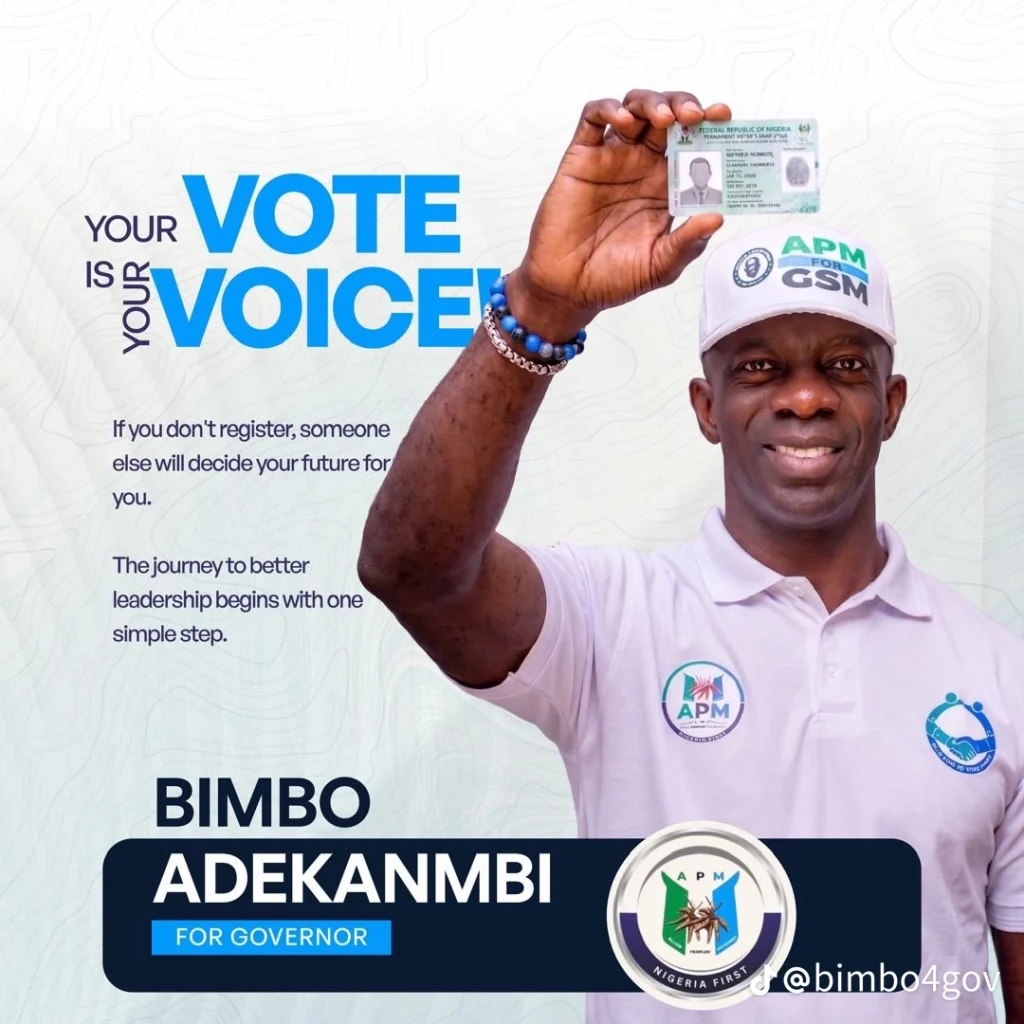
Their mission is unmistakable, and their ultimate objective is equally clear: to diminish the political stature of the APM governorship candidate, Bimbo Adekanmbi, and win a trophy they ordinarily could not obtain through the front door, by resorting instead to the backdoor of misinformation, manipulation and character assassination.
Like lazy students desperately searching for the Easy Way to Success series, they have now shifted the battlefield to social media, where lies can be concocted with astonishing speed, unsubstantiated stories woven into seemingly credible narratives, and political opponents caricatured beyond recognition.
There is also an appeal to pity at play. The calculated attempt is to set the APM national leadership against the Governor of Oyo State, Oluseyi Abiodun Makinde, by deliberately juxtaposing different but not necessarily contradictory observations.
When Governor Bala Mohammed, the Kaura of Bauchi, commended the increase in federal allocations and linked it to visible infrastructural development and improved quality of life, they hurriedly juxtaposed that with Governor Makinde’s own barefaced acknowledgment that, despite increased allocations, hunger remains etched on the faces of many Nigerians because of prevailing macroeconomic and household-level economic pressures.
But therein lies the intellectual dishonesty of their argument. A government can acknowledge economic hardship without denying infrastructural progress. Indeed, the ability to recognise both realities simultaneously is not a contradiction; it is an honest appraisal of a complex national situation.
The electorate, however, is not as gullible as these social-media tacticians appear to believe. Nigerians increasingly understand political language designed not to illuminate but to manipulate. George Orwell famously warned against language that is crafted to make lies sound truthful, murder respectable, and empty rhetoric appear solid.
This brings to mind Battlefield, the play in which Supremos, a dangerous gang lord, transforms what should ordinarily be a campus fracas into a full-blown battlefield. That appears to be precisely what some of these political actors are attempting to do: turn ordinary democratic contestation into an arena of digital warfare.
But for how long can this political drivel continue?
They hide beneath the veil of anonymity, launching attacks through caricatures, disinformation, emotional manipulation and manufactured narratives, apparently hoping to hoodwink the electorate into wasting its votes in 2027. What they seem not to understand is that the electorate is becoming considerably wiser and more discerning.
Rather than presenting their own vision, manifesto, competence and record for public scrutiny, they have made character assassination their principal campaign strategy. Instead of telling voters what they intend to do differently, they spend their energy trying to destroy the character of those they seek to replace.
The latest example is an AI-generated image portraying Bimbo Adekambi as a punch-drunk individual surrounded by imaginary bottles on a table. Can that fly?
Of course not.
Political competition should be a contest of ideas, records, character, competence and vision—not a competition in digital forgery and character assassination.
Artificial intelligence may be capable of manufacturing images, but it cannot manufacture credibility, nor can it manufacture the trust of an electorate that is paying attention.
The 2027 election will ultimately be decided by voters, not anonymous social-media caricaturists. And when the ballots are cast, the electorate will have the final word.
By then, no amount of manipulation, fabricated imagery or weaponised sentiment will substitute for the one thing democracy ultimately demands: the people’s informed choice.